For the next month leading up until the NBA draft, we will hear all sorts of
information coming out about which teams like what players, who’s willing to
move up to get someone they like, and which prospects could free fall. The best
we can do is guess who will go where. However, after the NBA Combine and Draft
Lottery, we now have the clearest picture we’ve had yet. Here’s how I see the
draft going down.
1. Philadelphia 76ers- Ben Simmons: F, LSU
Simmons is the best player in this draft, he has the potential to be a
superstar. He can do almost everything on the basketball court, score, rebound,
pass, dribble, defend you name it. The 76ers are still at the point in their
rebuild where they should be drafting best player available and not for fit,
although Simmons does fit well as he can come in and be the primary ball
handler. The one thing that Philly really needs that Simmons does not bring to
the table is shooting. Simmons has almost no range outside of 5 feet. But that
can be improved.
NBA Comparison: Lamar Odom
2. Los Angeles Lakers- Brandon Ingram: F, Duke
Ingram garnered some hype this year and he could challenge Simmons for the
top pick. Ingram has the potential to be a prolific scorer in the NBA, many
people have compared him to Kevin Durant. Ingram will probably never be that
good, but the star potential is there. He would be a great fit on a Laker team
that needs scoring and shooting. He also would help round out a great young
core consisting of Deangelo Russell, Jordan Clarkson, and Julius Randle.
NBA Comparison: Tayshaun Prince
3. Boston Celtics (from Brooklyn Nets)- Dragan Bender: F, Maccabi Tel Aviv
(Israel)
Bender is big, can shoot from distance, and has an incredible motor. In an
offseason where the Celtics could lose Jared Sullinger, Amir Johnson, and Jonas
Jerebko, they could use another big man who can come and stretch the floor. You
can check out my more detailed profile of Bender
here.
NBA Comparison: Frank Kaminsky
4. Phoenix Suns- Jaylen Brown: F, California
If this was any other team, I would have Jamal Murray or Buddy Hield at this
spot. However, the Suns are already ripe with guards with Eric Bledsoe, Brandon
Knight, Devin Booker, and Archie Goodwin. What they really lack is a power
forward to fit with their young core. Brown is raw, but he has the athleticism
that could allow him to become a solid player in the NBA.
NBA Comparison: Harrison Barnes
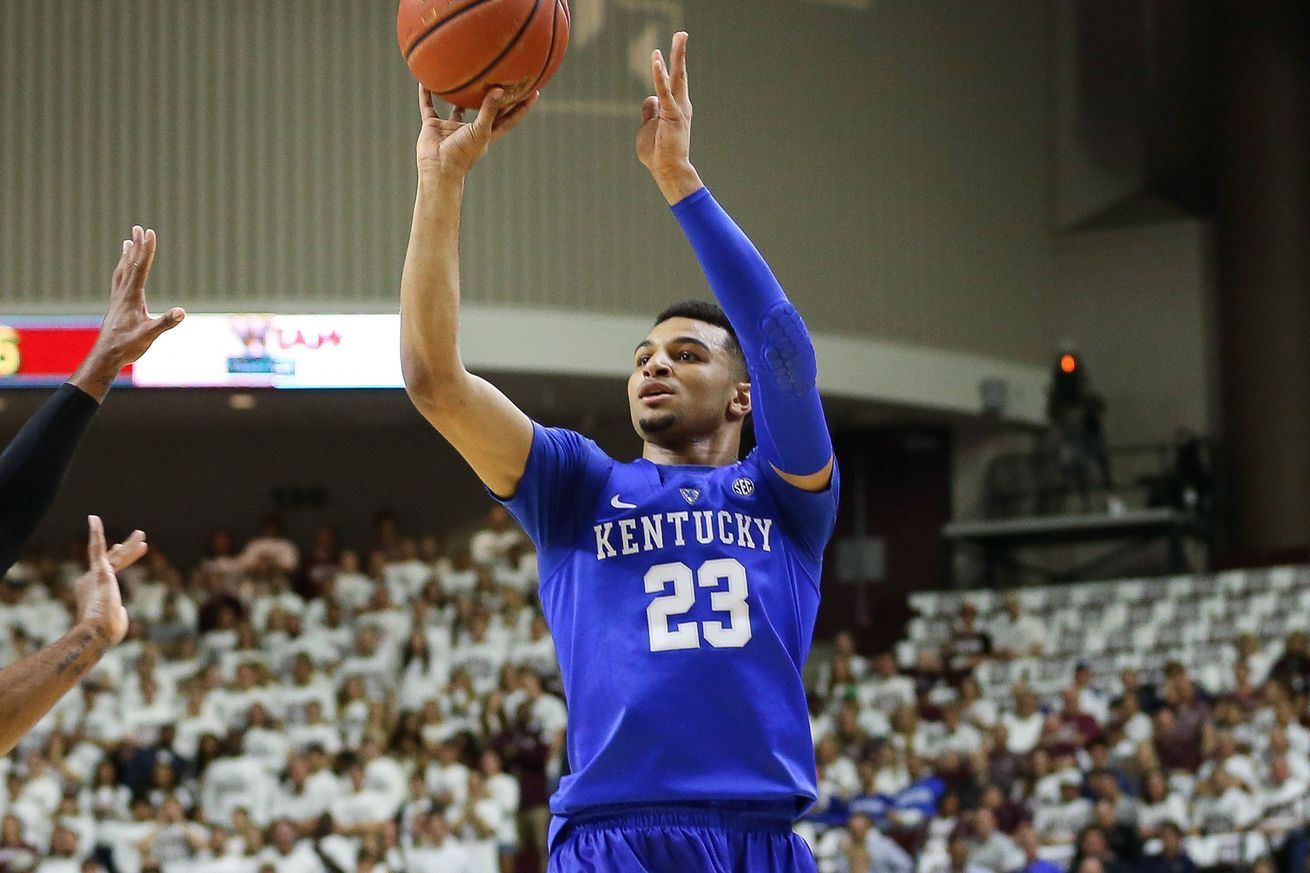
5. Minnesota Timberwolves- Jamal Murray: G, Kentucky
The Timberwolves have one of the most promising young cores in the league.
With the last two number one picks on their roster, Andrew Wiggins and
Karl-Anthony Towns, they seem to be sitting pretty for the future with new
coach Tom Thibodeau. Murray would fit in the back court nicely, as he could
play next to both Ricky Rubio and Zach Lavine at either the 1 or the 2. Murray
brings outside shooting that the Timberwolves sorely need as well.
NBA Comparison: Brandon Roy
6. New Orleans Pelicans- Buddy Hield: G, Oklahoma
The Pelicans have been struggling to build a competitive team around Anthony
Davis. They made the playoffs last season, and probably would have competed for
the 8th seed again this year if it wasn’t for all their injuries. Buddy Hield
fits in their win-soon timeframe as he can come in and immediately contribute.
Eric Gordon is a free agent this offseason and Hield’s skillset is very similar
to Gordon’s so he could come in and make up that production and possibly be a
building block for the future.
NBA Comparison: Bradley Beal
7. Denver Nuggets- Kris Dunn: G, Providence
There’s no perfect fit at this point in the draft for the Nuggets, so I
would not be surprised if they traded down. Even though the Nuggets drafted
point guard Emmanuel Mudiay in the first round last year, they could use
another guard. Dunn is a solid playmaker and could come in and make a positive
impact on a Nuggets team still looking for an identity.
NBA Comparison: Jeff Teague
8. Sacramento Kings- Henry Ellenson: F, Marquette
The Kings would have loved Dunn to fall one more pick to them at number 8,
but Ellenson is the best player left on the board, and would fit well with both
Demarcus Cousins and Willie Caulie-Stein. He can shoot, rebound, and even
create his own shot a little.
NBA Comparison: Mix of Chris Bosh and Kevin Love
9. Toronto Raptors (from New York Knicks)- Marquesse Chriss: F, Washington
Chriss is a tantalizing prospect due to his athletic ability and potential
as a stretch four. The Raptors are the best team with a lottery pick this year,
so they might look for someone who can contribute more immediately than Chriss,
but if they’re willing to be patient, he could be just what the Raps need.
NBA Comparison: Aaron Gordon
10. Milwaukee Bucks- Jakob Poeltl: C, Utah
With the Greg Monroe experiment proving to be a bust, I would not be
surprised to see the Bucks draft a center and try to move Monroe during the
offseason. Poeltl has shown that he can rebound, score, and protect the rim and
he has excellent size for the center position.
NBA Comparison: Jonas Valanciunas
11. Orlando Magic- Skal Labissiere: F/C, Kentucky
The Magic need a rim protector. They’re current frontcourt of Nikola Vucevic
and Aaron Gordon is undersized and lacks a shot blocking presence. Labissiere
as the potential to be one of the best shot blockers in the league. He also
showed the potential to stretch the floor with a silky smooth jump shot. He
could play alongside both Vucevic and Gordon.
NBA Comparison: John Henson with a jumpshot
12. Utah Jazz- Wade Baldwin: G, Notre Dame
If this season proved anything to the Jazz, it’s that they need another
point guard on the roster. When Dante Exum went down, they were left without a
truly competent point guard for most of the year. Baldwin is athletic and dynamic
and could come in and be a back-up to Exum and possibly challenge him for
minutes.
NBA Comparison: Eric Bledsoe
13. Phoenix Suns- Deyonta Davis: F/C, Michigan State
With their second lottery pick, the Suns should continue to look for frontcourt
help. Davis is an incredible worker with potential to be a great shot blocker,
rebounder, and defender.
NBA Comparison: Serge Ibaka without a jumper
14. Chicago Bulls- Demetrius Jackson
The Bulls need a backup point guard (or perhaps a point guard of the future
if they move on from Derrick Rose… don’t kill me Bulls fans). Jackson can come
in and run the second unit while providing scoring and athleticism.
NBA Comparison: Patrick Beverley
15. Denver Nuggets- Furkan Korkmaz: G, Anadolu Efes
NBA Comparison: Danny Green
16. Boston Celtics- Timothe Luwawu: G/F, Mega Leks
NBA Comparison: Kentavious Caldwell-Pope
17. Memphis Grizzlies- Domantas Saboins: F/C, Gonzaga
NBA Comparison: Julius Randle
18. Detroit Pistons- Tyler Ulis: G, Kentucky
NBA Comparison: T.J. Ford
19. Denver Nuggets- Denzel Valentine: G/F, Michigan State
NBA Comparison: Nicolas Batum
20. Indiana Pacers- Taureen Prince: F, Baylor
NBA Comparison- Marcus Morris
21. Atlanta Hawks- Ben Bentil: F, Providence
NBA Comparison: Markieff Morris
22. Charlotte Hornets- Damian Jones: C, Vanderbilt
NBA Comparison: Bismack Biyombo
23. Boston Celtics- Ante Zizc: C, Cibona Zagreb
NBA Comparison: Marcin Gortat
24. Philadelphia 76ers- Thon Maker: F/C, High School
NBA Comparison: Terrence Jones
25. Los Angeles Clippers- Diamond Stone: C, Maryland
NBA Comparison: Gorgui Dieng
26. Philadelphia 76ers- Ivica Zubac: C, Mega Leks
NBA Comparison: Jusuf Nurkic
27. Toronto Raptors- Brice Johnson: F, North Carolina
NBA Comparison: Kenneth Faried
28. Phoenix Suns- Malik Beasley: G, Florida State
NBA Comparison: Aaron Afflalo
29. San Antonio Spurs- Chinanu Onuaku: F/C, Louisville
NBA Comparison: Tristan Thompson
30. Golden State Warriors- Malachai Richardson: G/F Syracuse
NBA Comparison: Jeremy Lamb
If you like the blog, be sure to comment below and follow me on twitter
@bballbaron!